At least in the technology space, history not only repeats itself, it rhymes, it uses the same words in the same order sung to the same tune.
Why do we have data centers?
There could be lots of responses but if we boil them down to first principles, the answer is to process I/O.
What is I/O?
Every transaction – when you hit that enter key goes into the data center and grabs info to tell you which BBQ is the best in Texas.
That answer isn’t sitting in a handy digital envelope – the computer did not know you were going to ask that question – so it didn’t prepare the answer.
The computer sends little messages all over the place, grabs pieces of data from what can be hundreds of places in the “database” and returns the answer.
Those little messages are called I/O – meaning “input/output” and they consume about 95% of what that data center does.
Not 2%, not 11% – they consume the data center.
Impact I/O and you change the world.
In the world of A/I., if you tried Gemini for instance, you get back much more comprehensive answers than the best BBQ.
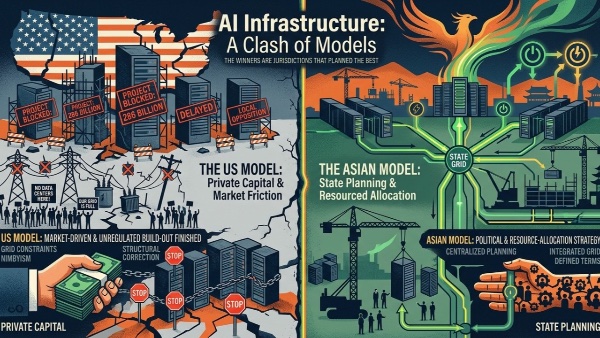
That means I/O explodes – more I/O means more data centers and you get to read the stories of an entire town in Georgia losing power, having its water polluted, for I/O.
If you thought I/O was a big deal before, A.I. makes I/O something you will be learning about very soon. Let’s begin teaching it here.
Here at the Black Swan, we demonstrate low I/O technology, and some other ones too, which enable any application – no matter how large, how complex – to run on a computer you can hold in your hand.
The secret – here in plain sight – is reducing I/O.
Reduce I/O to its minimum – you do not need that hyperscaler data center.